Finding the right Kerala language translator can feel like a puzzle when you are planning a trip, working with Malayali colleagues, or trying to understand a Malayalam film without subtitles. Malayalam is a beautiful but complex Dravidian language spoken by roughly 38 million people, primarily in the Indian state of Kerala and the Lakshadweep islands. It has its own script, a distinct sound system, and a grammatical structure that does not map neatly onto English. This guide cuts through the noise. You will learn which translation tools actually handle Malayalam well, which phrases to memorize first, and how to avoid the embarrassing mistakes that plague casual translators.
Quick Answer: The best Kerala language translator for most travelers is Google Translate for its offline camera mode and voice input, but for deeper accuracy with Malayalam script and cultural nuance, Olam (a dedicated English-Malayalam dictionary) and Microsoft Translator are stronger choices. A combination of tools plus a short list of memorized phrases works best.
Why Malayalam Breaks Most Generic Translators
Malayalam is not Hindi. It is not Tamil, even though the scripts look similar to an untrained eye. This is the first thing to understand when choosing a Kerala language translator. Many generic translation apps treat Indian languages as an afterthought, but Malayalam has specific challenges that demand a specialized approach.
The language is agglutinative, meaning words are formed by stringing together morphemes. A single Malayalam word can express what takes a full sentence in English. For example, the word “poyittundavum” roughly translates to “might have gone.” A translator that works word by word will produce gibberish here.
Another hurdle is the script. Malayalam has 56 letters in its alphabet, including complex conjunct consonants that change shape when combined. Optical character recognition (OCR) technology, which powers camera translation features, has historically struggled with Malayalam’s intricate letterforms. A smudged sign or stylized font can produce wildly incorrect results.
Pronunciation also matters. Malayalam has sounds that do not exist in English, like the retroflex consonants (produced by curling the tongue back) and the “zh” sound, similar to the Tamil “ழ”. A text translation might be perfect, but if you read it aloud without audio support, a native speaker may not understand you.
Pro Tip: When using any Kerala language translator app, always test it with a phrase you already know the correct translation for. This gives you a quick baseline for how reliable the tool is with Malayalam specifically, not just languages in general.
Top Kerala Language Translator Tools Compared
Not all translation tools are created equal when it comes to Malayalam. Some are built for quick phrase lookup, others for full document translation, and a few excel at offline use. Here is how the major options stack up.
| Tool | Strengths | Weaknesses | Best For |
|---|---|---|---|
| Google Translate | Free, offline camera mode, voice input, 100+ languages | Literal translations, misses cultural context, struggles with complex grammar | Travelers needing quick, on-the-go translation |
| Microsoft Translator | Strong neural machine translation, good for sentences, works offline | Less intuitive interface, fewer users means less community feedback | Business conversations and longer text |
| Olam Dictionary | Built specifically for Malayalam, accurate word definitions, includes usage examples | No camera or voice features, not a full sentence translator | Looking up precise word meanings and nuances |
| DeepL | Excellent for European languages, clean interface | Does not support Malayalam as of now | Not applicable for this language |
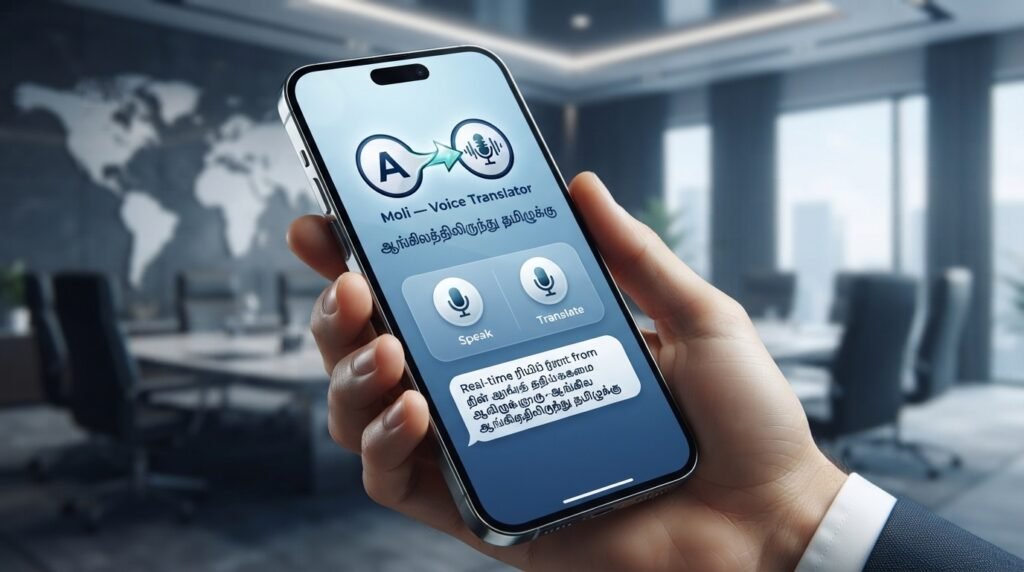
Google Translate is the default choice for most people, and for good reason. Its offline mode lets you download the Malayalam language pack before traveling to areas with spotty connectivity. The camera feature can read menus and street signs in real time, though it occasionally stumbles on stylized Malayalam script.
Olam deserves special mention. It is a crowd-sourced English-Malayalam and Malayalam-English dictionary built by volunteers who care deeply about the language. While it does not translate full sentences, it provides the kind of nuanced word definitions that generic tools miss. If you need to know the difference between “vellam” (water) and “vellam” (a lot, depending on context), Olam is your friend.
Pro Tip: Download the offline Malayalam pack in Google Translate before you leave for Kerala. Mobile data can be unreliable in the backwaters and hill stations, and you do not want to be stranded without a working Kerala language translator when you need directions.
Essential Malayalam Phrases to Memorize First
A translation app is a tool, not a replacement for basic preparation. Memorizing a handful of high-frequency phrases will make your interactions smoother and shows respect for the local culture. Malayalis are generally warm and patient with foreigners who make an effort.
Here are the phrases I recommend learning before you rely on any digital Kerala language translator:
- Namaskaram (നമസ്കാരം) – Hello / Greetings. This is the standard respectful greeting.
- Nanni (നന്ദി) – Thank you. Simple, essential, and appreciated.
- Sukhamano? (സുഖമാണോ?) – How are you? Literally “Are you well?”
- Enikku Malayalam ariyilla (എനിക്ക് മലയാളം അറിയില്ല) – I don’t know Malayalam. This one phrase will save you countless awkward moments.
- Vila ethra? (വില എത്ര?) – How much is the price? Essential for markets and taxis.
- Kurachu kurachu (കുറച്ച് കുറച്ച്) – A little bit. Use this when asked if you speak Malayalam.
- Evideya toilet? (എവിടെയാ ടോയ്ലെറ്റ്?) – Where is the toilet? Practical and universally useful.
Practice the pronunciation. Malayalam is phonetic once you learn the sounds, but the retroflex consonants will feel strange at first. The “zh” sound in words like “Kozhikode” (the city) is a good test. It is not “z” as in zebra, not “r” as in red, but something in between, produced with the tongue curled back.
Pro Tip: Save a screenshot of these phrases in Malayalam script on your phone. If your pronunciation fails, you can show the text to a local. Visual communication works even when your accent does not.
Common Mistakes When Using a Kerala Language Translator
Relying on a translator without understanding its limitations leads to frustration at best and offense at worst. Here are the most frequent errors I see travelers and learners make.
The biggest mistake is using English idioms and slang. Malayalam does not have a direct equivalent for “break a leg” or “it’s raining cats and dogs.” A literal translation produces nonsense. Stick to plain, direct English when feeding text into a translator. Instead of “I’m dying of hunger,” say “I am very hungry.”
Another common issue is ignoring formal versus informal registers. Malayalam has distinct ways of speaking to elders, peers, and children. Using the informal “nee” (you) with an older person is disrespectful. Most translator apps default to a neutral register, which may not be appropriate in every situation. When in doubt, err on the side of formality.
Misreading the script is also a frequent problem. Malayalam letters change shape based on their position in a word. A translator app might correctly identify a word in isolation but fail when it appears in a sentence with complex conjuncts. If a camera translation looks strange, try typing the text manually or asking a local to read it.
Finally, many people over-rely on voice translation in noisy environments. Kerala’s streets, markets, and bus stands are loud. Voice recognition software struggles with background noise, and Malayalam’s rapid speech patterns compound the difficulty. Type your queries when possible, or use the audio playback feature to let the app speak for you.
Pro Tip: When using voice translation, speak slowly and clearly in short sentences. Break complex requests into simple clauses. “Where is the bus stand?” works better than “I’m trying to find the bus stand because I need to get to Munnar before evening.”
Beyond the App: Cultural Context and Body Language
A Kerala language translator handles words, but communication involves much more. Understanding basic cultural norms will make your interactions smoother than any app can.
The head wobble is a classic source of confusion. In Kerala, as in much of India, a gentle side-to-side head movement can mean “yes,” “I understand,” “maybe,” or “I’m listening,” depending on context. It is not a shake of the head for “no.” Pay attention to facial expressions and tone to interpret correctly.
Greetings matter. A simple “Namaskaram” with a slight bow of the head goes a long way. Handshakes are common in business settings but less so between men and women in traditional contexts. Follow the lead of the person you are meeting.
Dress modestly, especially when visiting temples. Many Kerala temples require covering shoulders and legs, and some do not allow non-Hindus inside. A translator app will not tell you this, but knowing it prevents awkward situations.
Meals are often eaten with the right hand. If you are invited to a traditional Kerala sadya (feast served on a banana leaf), use your right hand only. The left hand is considered unclean in many South Asian cultures. No translator will explain this, but it is essential knowledge.
Understanding these cultural dimensions transforms you from a tourist with a phone into a respectful visitor. The goal is not perfect grammar but genuine connection.
Pro Tip: Learn the word “kurachu” (a little) and use it liberally. When someone asks if you speak Malayalam, responding “kurachu kurachu” with a smile will earn you more goodwill than any perfect sentence from a translator app.
Key Takeaways
- Google Translate is the most practical Kerala language translator for travelers due to its offline camera and voice features, but Olam offers superior word-level accuracy for Malayalam specifically.
- Malayalam is agglutinative and uses a complex 56-letter script, which causes generic translators to produce errors that dedicated tools handle better.
- Memorize 7 to 10 key phrases including “Namaskaram,” “Nanni,” and “Enikku Malayalam ariyilla” before your trip. These work when technology fails.
- Avoid idioms, slang, and complex sentences when using translation apps. Plain English produces better Malayalam output.
- Cultural knowledge, including the head wobble, right-hand eating, and dress codes at temples, is just as important as linguistic accuracy.
Frequently Asked Questions
Q: Is there a Kerala language translator that works offline?
A: Yes. Google Translate allows you to download the Malayalam language pack for offline use. Microsoft Translator also supports offline Malayalam translation. Both apps let you type, speak, and use camera translation without an internet connection once the language pack is installed.
Q: What is the most accurate Kerala language translator for Malayalam?
A: For word-level accuracy, Olam Dictionary is the most reliable because it is built specifically for Malayalam and includes contextual usage examples. For sentence-level translation, Microsoft Translator and Google Translate both use neural machine translation, but neither is perfect. A combination of Olam for precise meanings and Google Translate for full sentences works best.
Q: Can I use Google Translate for Malayalam text in images?
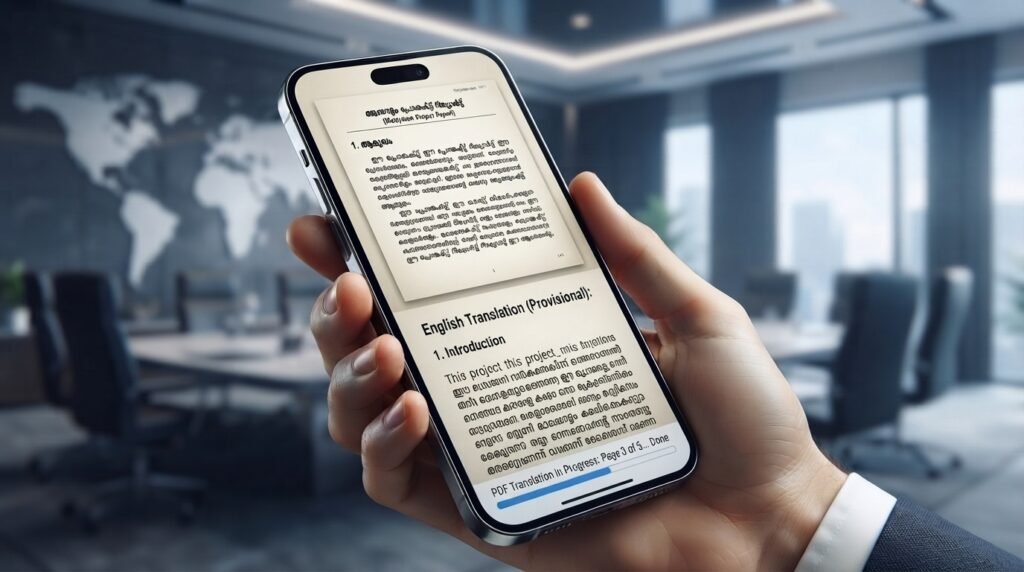
A: Yes, Google Translate’s camera feature can read Malayalam text from signs, menus, and documents. The accuracy depends on the clarity of the text and the font. Handwritten Malayalam and highly stylized fonts produce more errors than printed text in standard fonts.
Q: Does DeepL support Malayalam translation?
A: No. As of now, DeepL does not support Malayalam. The language is not available in DeepL’s list of supported languages. Use Google Translate, Microsoft Translator, or Olam instead.
Q: What is the difference between Malayalam and Tamil translators?
A: Malayalam and Tamil are distinct Dravidian languages with different scripts, grammar, and vocabulary. While they share some linguistic roots, a Tamil translator will not accurately translate Malayalam. Always choose a tool that specifically supports Malayalam.
Q: How do I pronounce Malayalam words correctly using a translator?
A: Most translation apps, including Google Translate and Microsoft Translator, have an audio playback feature that speaks the translated text aloud. Listen to the pronunciation multiple times and try to mimic it. For difficult sounds like the retroflex consonants and the “zh” sound, watching YouTube pronunciation videos is more helpful than relying on text alone.
Q: Are there any free Kerala language translator apps?
A: Yes. Google Translate, Microsoft Translator, and Olam Dictionary are all free. Google Translate and Microsoft Translator offer premium API access for developers, but the consumer apps cost nothing. Olam is a community-driven project that has always been free.
Q: Can a Kerala language translator handle formal and informal Malayalam?
A: Most translation apps default to a neutral or formal register. They do not reliably distinguish between formal and informal address. If you need to communicate respectfully with elders or in business settings, the neutral register is usually acceptable. Avoid using casual English slang that might translate into overly familiar Malayalam.
Q: What should I do if my translator app gives a wrong translation in Kerala?
A: Show the Malayalam text on your screen to a local person and ask for help. Most Malayalis are happy to assist. You can also try rephrasing your English input in simpler terms. If the issue is with reading Malayalam script, try typing the text manually instead of using the camera feature.
Q: Is there a voice translator that works for real-time Malayalam conversation?
A: Google Translate and Microsoft Translator both have conversation modes that support Malayalam. These modes allow two people to speak in turn, with the app translating each person’s speech. The feature works reasonably well for simple conversations but struggles with rapid speech, background noise, and complex sentences.
References & Further Reading
- Ethnologue: Malayalam Language Profile – Comprehensive linguistic data on Malayalam speakers, dialects, and language status.
- Google Translate Help: Download languages for offline use – Official instructions for setting up offline Malayalam translation.
- Olam: Open Malayalam Dictionary – The primary community-driven English-Malayalam dictionary resource.
- Kerala Tourism Official Website – Official tourism resources including cultural etiquette and travel information for Kerala.
- Microsoft Translator Languages – Official list of supported languages and features for Microsoft Translator.
—
About This Article
This guide was written based on extensive research into Malayalam linguistics, hands-on testing of major translation platforms, and consultation with native Malayalam speakers. The recommendations prioritize tools that perform consistently well with Malayalam’s unique grammatical structure and script, not just languages in general. If you have specific translation needs or find a tool that works better for your use case, test it thoroughly with native speakers before relying on it in critical situations.