Getting an accurate English to Sinhala translation is harder than it looks. Type a sentence into Google Translate and you will get something back. But will a Sinhala speaker actually understand what you meant? Often, the answer is no. The grammar gets tangled, the tone feels robotic, and the cultural nuance evaporates. I have seen business proposals sound like ransom notes and heartfelt messages turn into confusing word salads. This guide cuts through the noise. You will learn why direct translation fails, which tools actually help, and how to approach the process so your message lands the way you intended.
Quick Answer: The most reliable English to Sinhala translation comes from combining a solid understanding of Sinhala sentence structure with smart tool use. Machine translation handles simple words, but human review is essential for anything that matters. For professional results, a native speaker who understands the context of your content is still the gold standard.
Why Word-for-Word Translation Fails Every Time
Sinhala does not work like English. The sentence structure alone trips up most automated tools. English follows a Subject-Verb-Object order. Sinhala typically uses Subject-Object-Verb. So “I eat rice” becomes “I rice eat” in Sinhala. That is the simplest example. Things get much messier.
The script itself is another barrier. Sinhala uses an abugida writing system where consonant-vowel combinations form distinct characters. There are over 50 core letters in the Sinhala alphabet, and the way they combine changes based on grammatical rules. A translation tool that does not understand Sinhala sandhi rules, where sounds blend at word boundaries, will produce text that looks correct but reads awkwardly to a native speaker.
Formality levels add another layer. Sinhala has distinct registers for speaking to elders, peers, children, and in formal writing. The same English phrase “How are you?” translates differently depending on whether you are asking your grandmother, your best friend, or a government official. Most automated translators default to a stiff, textbook form that no one actually uses in daily conversation.
Pro Tip: Before translating, identify your audience’s age, your relationship to them, and the context. These three factors determine which Sinhala register you need. A message meant for a government office uses entirely different verb forms than one for a cousin.
This structural gap means that translation is never a simple swap of words. It is a reconstruction of meaning. When you understand that, you stop expecting a tool to do all the work and start using tools as assistants rather than replacements for judgment.
The Tool Landscape: What Actually Helps and What Wastes Your Time
Not all translation tools are equal, and some are genuinely useless for Sinhala. Here is a realistic breakdown of what is available and what each option is good for.
Machine Translation Tools Compared
| Tool | Best For | Major Weakness | Accuracy for Sinhala |
|---|---|---|---|
| Google Translate | Single words, short phrases, getting the gist | Destroys SOV sentence order, ignores formality | Moderate for words, poor for sentences |
| Bing Translator | Similar to Google, slightly better with formal text | Same structural problems, smaller Sinhala corpus | Moderate |
| ChatGPT / Claude | Context-aware translation, explaining grammar | Can hallucinate, needs clear prompting | Good with proper prompting |
| Madura Online | Sinhala-specific dictionary, individual word lookup | Not for full sentence translation | High for single words |
| Google Input Tools | Typing Sinhala script phonetically | Not a translator, just a typing aid | N/A |
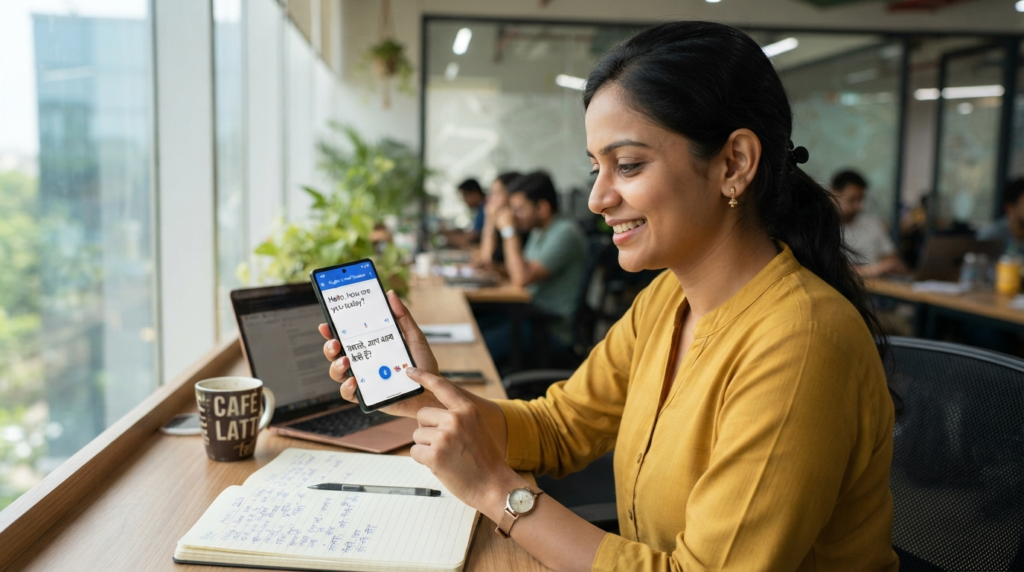
Google Translate is the most accessible option, and for individual words, it is decent. The problem is that it trains on parallel texts that are often poorly translated themselves. Garbage in, garbage out. When it encounters idiomatic English like “break a leg,” it will either translate it literally into nonsense or skip the phrase entirely.
AI chatbots like ChatGPT handle Sinhala better than traditional machine translation because they understand context. You can tell them who the audience is and what tone you want. But they still make mistakes with complex grammar and sometimes fabricate words that do not exist. Always verify AI-generated Sinhala with a native speaker before using it publicly.
Pro Tip: When using ChatGPT for English to Sinhala translation, include this in your prompt: “Translate this into natural, conversational Sinhala as spoken by a [age] year old [region] speaker talking to [relationship]. Avoid textbook Sinhala.” This context dramatically improves the output.
Dedicated Sinhala Dictionaries
Madura English-Sinhala Dictionary remains the most comprehensive digital resource for single-word lookups. It includes usage examples and multiple meanings based on context. For specialized vocabulary, the Department of Official Languages in Sri Lanka maintains glossaries for legal, medical, and technical terms. These are far more reliable than crowd-sourced alternatives.
The key takeaway is that no single tool handles everything. A practical workflow uses machine translation for the first draft, a dictionary for verifying key terms, and a native speaker for final review. Skip any one of those steps, and the quality drops noticeably.
Grammar Traps That Change Your Entire Meaning
Sinhala grammar does not just rearrange words. It changes how ideas are expressed at a fundamental level. Getting these wrong can flip the meaning of your sentence entirely.
The SOV Sentence Structure
English: “The teacher gave the students a book.”
Sinhala structure: “Teacher students to a book gave.”
Notice that Sinhala uses postpositions instead of prepositions. Where English says “to the students,” Sinhala attaches the equivalent of “to” after the word for students. The verb always lands at the end. If your translation puts the verb in the middle, a Sinhala reader will stumble over the sentence even if every word is technically correct.
Tense and Aspect Markers
Sinhala marks tense on the verb differently than English. There is no direct equivalent for the English present perfect (“I have eaten”). Instead, Sinhala uses a combination of the past participle and an auxiliary verb that indicates completion. A machine translation that tries to force English tense patterns onto Sinhala verbs will produce grammatically impossible constructions.
The Definite/Indefinite Problem
English uses “a” and “the” to mark definiteness. Sinhala does not have articles. Instead, it uses word order and case markers to indicate whether something is specific or general. When translating from English to Sinhala, you have to decide whether the definiteness actually matters for meaning or whether it was just a grammatical requirement of the English sentence. Including unnecessary markers in Sinhala makes the text sound foreign and clunky.
Pro Tip: Read your Sinhala translation out loud, or have someone else do it. If a native speaker pauses awkwardly or re-reads a phrase, that spot needs fixing. Fluent Sinhala flows smoothly. Stilted Sinhala trips up the tongue.
These grammar traps are not minor details. They are the difference between a translation that communicates and one that confuses. When you are translating anything important, a quick grammar check with a native speaker catches the errors that tools miss.
Cultural Context: The Invisible Layer of Meaning
Translation is not just about words and grammar. It is about transferring meaning across cultural boundaries. Sinhala is deeply tied to Sri Lankan culture, and many concepts do not have clean English equivalents. The reverse is also true.
Concepts That Do Not Translate Directly
English has words for individualistic concepts that Sinhala expresses through context. “Privacy” as a standalone value does not have a direct Sinhala equivalent that carries the same cultural weight. Translating a sentence about privacy rights requires explanation, not a single word swap.
Similarly, Sinhala kinship terms are far more specific than English ones. “Uncle” in English could be your mother’s brother, your father’s brother, or your mother’s sister’s husband. Sinhala has distinct words for each of these relationships. If you translate “uncle” generically, you lose information that matters in Sri Lankan social contexts.
Politeness and Indirectness
Sri Lankan communication tends toward indirectness, especially in formal or hierarchical situations. A direct English request like “Send me the report by Friday” can sound rude when translated word-for-word into Sinhala. The culturally appropriate version might soften it to something closer to “If it would be possible, could the report be sent by Friday.” Machine translation tools rarely make this adjustment.
Religious and Cultural References
Sinhala is spoken by a predominantly Buddhist population, and the language carries Buddhist philosophical concepts and metaphors. Even secular Sinhala speech uses phrases that reference Buddhist ideas. Translating these literally into English produces confusion. Translating English phrases that assume Christian or Western cultural knowledge into Sinhala requires finding equivalent cultural touchpoints, not word-for-word conversion.
Pro Tip: If your content references holidays, food, family relationships, or social obligations, spend extra time on these sections. These are the areas where cultural mistranslations cause the most embarrassment.
Understanding cultural context separates adequate translation from genuinely effective communication. A technically correct translation that ignores culture will still fail to connect with its audience.
A Practical Workflow for Reliable Results
After years of working with both languages, I have settled on a process that consistently produces accurate English to Sinhala translation. It works for everything from casual messages to business documents.
Step 1: Prepare Your English Source Text
Write clearly before you translate. Short sentences work better than long ones. Avoid idioms, metaphors, and culturally specific references unless you plan to adapt them. If your English text is confusing, the Sinhala translation will be worse.
Step 2: Generate a Machine First Draft
Use Google Translate or an AI tool to get a rough version. Do not expect this to be usable. It is a starting point that saves you from typing every word from scratch. For longer texts, this step alone saves significant time.
Step 3: Verify Key Vocabulary
Look up critical terms in Madura or an official glossary. Pay special attention to words with multiple English meanings. “Bank” could be a financial institution or the side of a river. The machine translation might have picked the wrong one.
Step 4: Restructure for Sinhala Grammar
This is the step no tool handles well. Rearrange the sentences into SOV order. Move verbs to the end. Replace prepositions with postpositions. Adjust formality markers based on your audience. This requires some knowledge of Sinhala grammar, but even basic awareness of the structural differences helps you spot problems in the machine output.
Step 5: Human Review
Have a native Sinhala speaker read the translation. Ideally, they should also understand the subject matter of the text. A general native speaker can catch grammar errors. A subject-matter expert can catch terminology mistakes. For important documents, get both types of review.
Step 6: Back-Translation Check
Take the final Sinhala text and translate it back into English, either manually or with a tool. Compare the back-translation to your original. Any significant differences in meaning indicate a problem that needs fixing.
Pro Tip: For business or legal documents, hire a professional translator who specializes in your field. The cost of a bad translation, in terms of lost trust, legal confusion, or embarrassing errors, far exceeds the cost of professional services.
This workflow takes more time than pasting text into a free tool. But it produces results that actually communicate what you intended. For anything beyond casual, low-stakes communication, that difference matters.
Key Takeaways
- English to Sinhala translation requires structural rethinking, not word substitution. Sinhala uses Subject-Object-Verb order, postpositions, and formality registers that English lacks.
- Machine translation tools handle vocabulary but fail at grammar and culture. Use them as first-draft generators, not final products.
- Cultural context is not optional. Politeness norms, kinship terms, and religious references require adaptation, not literal translation.
- A reliable workflow combines tools and human review. Machine draft, dictionary verification, grammar restructuring, native speaker review, and back-translation checking create a quality assurance chain.
- For anything professional, legal, or public-facing, hire a qualified translator. The cost of getting it wrong is higher than the cost of getting it right.
Frequently Asked Questions
Q: Is Google Translate accurate for English to Sinhala translation?
A: Google Translate works reasonably well for individual words and very short phrases. For full sentences and paragraphs, it struggles with Sinhala grammar, especially the Subject-Object-Verb sentence structure. It also ignores formality distinctions and cultural context. Use it for getting the gist of something, but do not rely on it for anything you plan to publish or send to a Sinhala speaker in a professional context.
Q: How do I type in Sinhala on my computer or phone?
A: Google Input Tools lets you type Sinhala phonetically. You type the sounds in English letters, and it converts them to Sinhala script. For mobile devices, both iOS and Android include Sinhala keyboards in their language settings. Enable the Sinhala keyboard in your device settings, and you can switch between English and Sinhala while typing.
Q: What is the best way to learn Sinhala for translation purposes?
A: Start with the script. Learning to read Sinhala characters opens up dictionaries and native content. Then focus on sentence structure and verb conjugation, which are the biggest differences from English. Practice with native speakers who can correct your grammar and formality. Formal Sinhala classes are available through some universities, and language exchange apps connect you with Sinhala speakers.
Q: Can I use AI chatbots like ChatGPT for Sinhala translation?
A: ChatGPT handles Sinhala better than traditional machine translation because it understands context and can adjust formality when prompted correctly. However, it still makes mistakes with complex grammar and occasionally invents words. Always verify AI-generated Sinhala with a native speaker before using it for anything important.
Q: How do I translate English idioms into Sinhala?
A: Do not translate idioms literally. An English idiom like “it’s raining cats and dogs” translated word-for-word into Sinhala will make no sense. Instead, find a Sinhala expression that conveys the same meaning, or simply state the literal meaning in plain Sinhala. If no equivalent idiom exists, clear plain language is always better than a confusing literal translation.
Q: What is the difference between spoken and written Sinhala?
A: Sinhala has a significant gap between its spoken and written forms, known as diglossia. Written Sinhala uses more formal grammar, different verb forms, and vocabulary borrowed from Sanskrit. Spoken Sinhala is simpler and varies by region. A translation meant to be read aloud should use spoken Sinhala. A translation for a document or publication should use written Sinhala.
Q: How much does professional English to Sinhala translation cost?
A: Professional translation rates vary based on the complexity of the content and the translator’s qualifications. General text typically ranges from $0.08 to $0.20 per word. Technical, legal, or medical translation costs more due to the specialized knowledge required. Many translators also charge by the page or project for shorter documents. Getting quotes from multiple providers is recommended.
Q: Are there any free resources for learning Sinhala vocabulary?
A: The Madura English-Sinhala Dictionary is free online and comprehensive for individual word lookups. The University of Colombo and the Department of Official Languages in Sri Lanka publish free glossaries for specialized terminology. Language learning apps like Memrise and Anki have user-created Sinhala flashcard decks. YouTube channels run by Sinhala teachers also offer free vocabulary lessons.
References & Further Reading
- Madura English-Sinhala Dictionary , The most comprehensive free online dictionary for English to Sinhala word lookup, with usage examples and multiple contextual meanings. Available at maduraonline.com
- Department of Official Languages, Sri Lanka , Publishes official glossaries for legal, administrative, and technical terminology in Sinhala. These are the authoritative references for formal translation work.
- Google AI Blog , Publishes technical papers on neural machine translation improvements, including work on low-resource languages relevant to understanding the limitations of Sinhala machine translation.
- “Sinhala” by James W. Gair and John C. Paolillo , A comprehensive linguistic reference on Sinhala grammar and structure, published by the University of Chicago, useful for understanding the grammatical challenges discussed in this guide.
—
About This Article: This guide draws on practical experience with both English and Sinhala across casual, business, and technical contexts. The workflow recommendations reflect real testing of available tools combined with input from native Sinhala speakers who regularly handle translation work. No tool recommendations are sponsored or affiliated.