
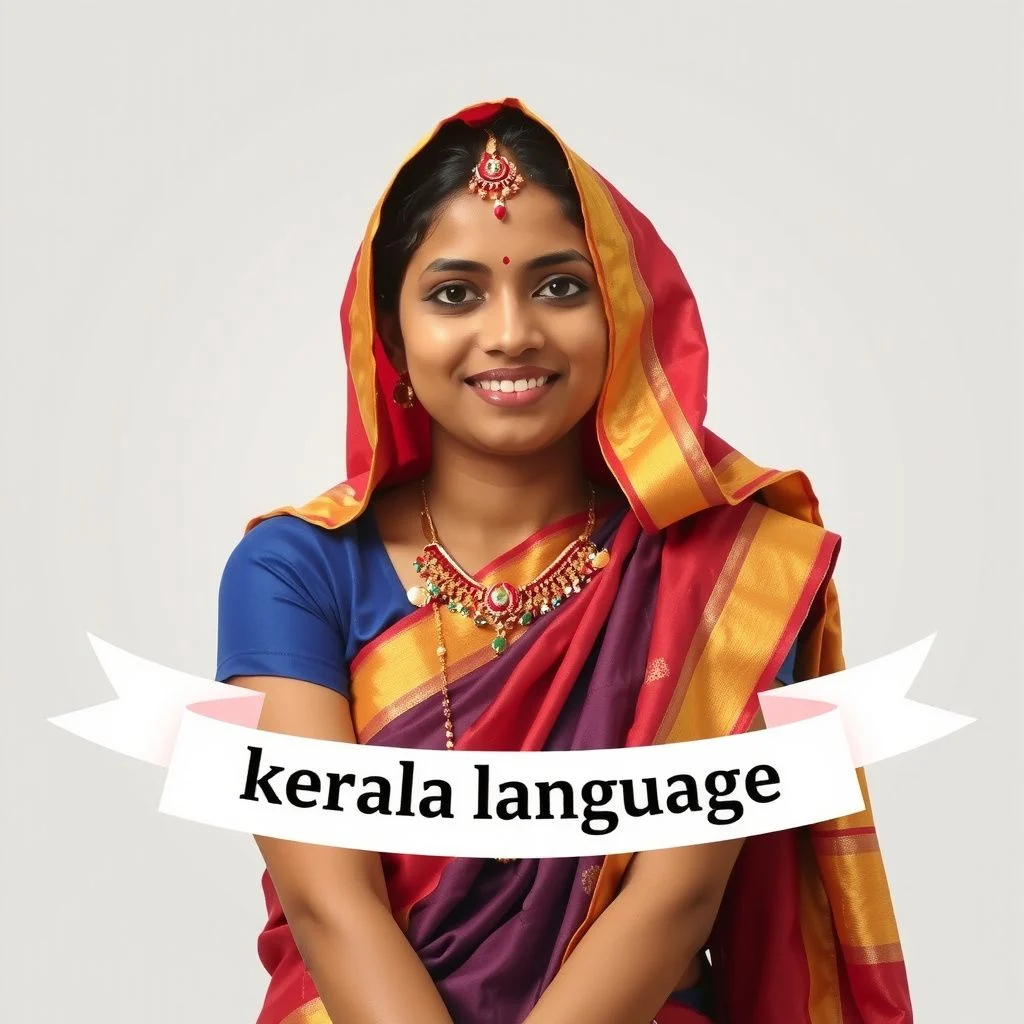
If you are planning a trip to India or just trying to understand the region better, you have probably asked yourself what the “Kerala language” actually is. The short answer is Malayalam, but treating it as just a language misses the entire cultural weight behind it. This guide breaks down the difference between the state and the language, gives you the practical phrases you need, and explains why English will only get you so far in certain parts of the state.
Quick Answer: The primary Kerala language is Malayalam, a Dravidian language spoken by roughly 35 million people primarily in the state of Kerala and the union territories of Lakshadweep and Puducherry.
What Is the Kerala Language? Why “Kerala” Isn’t a Language
Many travelers and geography enthusiasts mistakenly search for “Kerala language” assuming that every Indian state has a language named exactly after the state. That works for Tamil Nadu (Tamil), Karnataka (Kannada), or Andhra Pradesh (Telugu). But Kerala breaks that pattern.
The official language of Kerala is Malayalam. It is a member of the Dravidian language family, which includes Tamil, Kannada, and Telugu. Malayalam is a classical language of India, a status officially granted by the Government of India in 2013. This status is reserved for languages with a rich heritage and a long literary history.
Malayalam is not a dialect of Tamil. That is a common misconception because the two languages share a border and a long history. While they split from a common ancestor centuries ago, they are now distinct languages with different scripts, grammar, and vocabulary. A Malayali (a person from Kerala) cannot automatically understand a Tamil speaker and vice versa.
Pro Tip: If you are filling out visa forms or travel documents, never write “Kerala” in the language field. The correct entry is Malayalam.
The Malayalam Script: A Visual Distinction
The Malayalam script is often described as one of the most visually complex scripts in India. It is rounded and looping, a characteristic that developed because palm leaves were used as the primary writing surface for centuries. Straight lines would tear the leaves, so the script evolved to be circular.
The modern Malayalam script has 54 letters including vowels and consonants. It is written from left to right, like English, but the letters connect differently. If you see a sign in Kerala and it looks like a series of intricate loops and circles, you are looking at Malayalam.
Malayalam vs Tamil: Clearing Up the Confusion
Since Kerala shares its eastern border with Tamil Nadu, many outsiders assume the two languages are interchangeable. They are not. Here is a quick breakdown of the differences.
| Feature | Malayalam (Kerala) | Tamil (Tamil Nadu) |
|---|---|---|
| Language Family | Dravidian | Dravidian |
| Script | Malayalam script (rounded, looping) | Tamil script (angular, fewer loops) |
| Number of Letters | 54 | 31 |
| Sanskrit Influence | Very high | Moderate |
| Official Status | Kerala, Lakshadweep, Puducherry | Tamil Nadu, Puducherry, Sri Lanka, Singapore |
| Classical Language Status | Granted in 2013 | Granted in 2004 |
The biggest difference for a casual observer is the script. Malayalam looks fuller and more ornamental. Tamil looks more compact and geometric. The two languages also sound quite different. Malayalam has a more melodic, flowing rhythm, while Tamil has a sharper, more percussive quality to the untrained ear.
One of the most important distinctions is the Sanskrit influence. Malayalam borrowed heavily from Sanskrit over the centuries, both in vocabulary and grammar. Tamil, while it did borrow some Sanskrit words, maintained a more independent vocabulary. This is why Malayalam has many words that sound closer to Hindi or Sanskrit than to Tamil, even though it is a Dravidian language.
Pro Tip: If you speak Hindi, do not assume that will help you in Kerala. Hindi is not widely spoken in Kerala compared to other northern states. English is often a better fallback.
The History of Malayalam: From Dialect to Classical Language
Malayalam did not appear overnight. It evolved over roughly a thousand years, and its history is a story of gradual separation from Tamil and increasing influence from Sanskrit.
The earliest known written records of Malayalam date back to the 9th century CE. The Vazhappally inscription, dated to around 830 CE, is often cited as one of the earliest examples of Old Malayalam. Before that, the region used a script called Vattezhuthu (round script), which was shared with Tamil.
By the 13th century, Malayalam had established itself as a distinct literary language. The Ramacharitam, a poem written in the 12th or 13th century, is considered one of the earliest major works in Malayalam. The language continued to evolve through the medieval period, absorbing Sanskrit vocabulary through the influence of Hindu scholars and temples.
The 19th century brought a major shift. Christian missionaries, particularly Hermann Gundert, a German missionary, compiled the first Malayalam-English dictionary in 1872. Gundert also wrote a Malayalam grammar book that standardized many of the rules still used today. His work was so influential that the dictionary is still referenced by scholars.
In 2013, the Government of India officially declared Malayalam a classical language, joining Tamil, Sanskrit, Kannada, and Telugu. This recognition was based on the language’s antiquity, its independent literary tradition, and its rich body of ancient literature.
Practical Malayalam Phrases for Travelers
You do not need to be fluent to get by in Kerala, but knowing a handful of phrases will dramatically improve your experience. People in Kerala are generally warm and patient with foreigners who make an effort.
Here is a list of the most practical phrases, with rough phonetic pronunciations.
- Namaskaram (nah-mah-skah-rum) , Hello / Greetings. This is the universal greeting in Kerala.
- Nanni (nun-nee) , Thank you. Use this often. It is always appreciated.
- Sukhamano? (soo-khah-mah-no) , How are you? / Are you well?
- Sheri (sheh-ree) , Okay / Fine / Yes. This is the most useful word in Malayalam. It means agreement or acknowledgment.
- Venda (ven-dah) , No / I don’t want it. Useful for declining street vendors politely.
- Enikku Malayalam ariyilla (eh-nik-koo mah-lah-yah-lam ah-ree-yill-ah) , I don’t know Malayalam. This phrase buys you a lot of goodwill.
- Evideyanu bathroom? (eh-vee-deh-yah-noo bath-room) , Where is the bathroom? The word “bathroom” is understood, so you only need the first word.
- Ithu ethra rupaya? (ih-thoo eh-thrah roo-pah-yah) , How much is this? Essential for markets and auto-rickshaws.
- Kurachu kurakkamo? (koo-rah-choo koo-rah-kah-mo) , Can you reduce it a bit? Bargaining is common in local markets.
- Chetta (cheh-ttah) , Brother / Sir. Used to address a man respectfully. Chechi (cheh-chee) is the female equivalent.
Pro Tip: The word Sheri is your Swiss Army knife. Use it to say yes, okay, fine, agreed, understood, or “that works.” It is the single most versatile word in the Kerala language.
English in Kerala: How Far Will It Get You?
Kerala has one of the highest literacy rates in India, consistently above 90% according to Indian census data. English is taught in schools from an early age, and most people in urban areas like Kochi, Thiruvananthapuram, and Kozhikode can hold a basic conversation in English.
That said, English proficiency drops sharply in rural areas and among older generations. In villages, you may find that only the schoolteacher, the local shop owner, or a younger person can communicate in English. In these situations, your basic Malayalam phrases become invaluable.
The tourism industry in Kerala is well-developed. Staff at hotels, resorts, and popular tourist attractions almost always speak English. The same is true for licensed tour guides. But auto-rickshaw drivers, small tea shop owners, and bus conductors may not.
Here is a quick breakdown of where English works and where Malayalam helps.
- Urban hotels and restaurants: English is fine.
- Rural homestays: Basic English, but Malayalam phrases help a lot.
- Auto-rickshaws and taxis: English is hit or miss. Learn numbers and basic directions.
- Local markets: English is limited. Learn bargaining phrases.
- Temples and religious sites: English signs are common, but spoken English varies.
- Government offices: English is often understood but Malayalam is preferred.
The bottom line: you can survive in Kerala with English alone, but you will have a much richer experience with even a basic grasp of Malayalam.
Key Takeaways
- The Kerala language is Malayalam, a Dravidian language spoken by roughly 35 million people.
- Malayalam is not a dialect of Tamil. It has its own script, grammar, and a much heavier Sanskrit influence.
- Malayalam was granted classical language status by the Government of India in 2013.
- The Malayalam script has 54 letters and is known for its rounded, looping appearance.
- Learning just 10 basic phrases will significantly improve your travel experience in Kerala.
Frequently Asked Questions About the Kerala Language
Q: Is Kerala a language or a state?
A: Kerala is a state in southern India. The language spoken in Kerala is called Malayalam. Many people mistakenly refer to it as the “Kerala language,” but the correct name is Malayalam.
Q: What language is spoken in Kerala?
A: The primary language spoken in Kerala is Malayalam. It is the official language of the state and is spoken by the vast majority of the population. English is also widely used, especially in urban areas and within the tourism industry.
Q: Is Malayalam similar to Tamil?
A: Malayalam and Tamil are both Dravidian languages and share a common ancestor. However, they are distinct languages with different scripts, grammar, and vocabulary. Malayalam has a much higher degree of Sanskrit influence than Tamil. Speakers of one language cannot automatically understand the other.
Q: How many people speak Malayalam?
A: Malayalam is spoken by approximately 35 million people worldwide. The vast majority live in the Indian state of Kerala. Significant Malayalam-speaking communities also exist in the Gulf countries, particularly the UAE, Saudi Arabia, and Qatar, as well as in the United States and the United Kingdom.
Q: Is Malayalam hard to learn?
A: Malayalam is considered one of the more challenging Indian languages for English speakers to learn. The script is complex, the grammar includes features like verb agreement with both subject and object, and the pronunciation includes sounds that do not exist in English. However, learning basic conversational phrases is very achievable with practice.
Q: What is the script of Malayalam called?
A: The script is simply called the Malayalam script. It is a Brahmic script, meaning it descended from the ancient Brahmi script. The modern Malayalam script has 54 letters and is characterized by its rounded, looping shapes, which developed because palm leaves were the traditional writing surface.
Q: Do people in Kerala speak Hindi?
A: Hindi is not widely spoken in Kerala compared to northern Indian states. While some people in Kerala understand basic Hindi, especially those who have traveled or worked in other parts of India, it is not a reliable language for communication. English is a much safer fallback for travelers who do not speak Malayalam.
Q: What is the official language of Kerala?
A: The official language of Kerala is Malayalam. English is also used as an official language for many government and administrative purposes, a legacy of the British colonial period and a practical necessity for interstate communication.
Q: Is Malayalam a classical language?
A: Yes. Malayalam was officially granted classical language status by the Government of India in 2013. This designation recognizes the language’s ancient origins, its independent literary tradition spanning over a thousand years, and its rich body of classical literature.
Q: What is the difference between Malayalam and Kannada?
A: Malayalam and Kannada are both Dravidian languages, but they are not mutually intelligible. Kannada is spoken primarily in the neighboring state of Karnataka. The two languages have different scripts, different phonology, and different vocabulary. Malayalam has a stronger Sanskrit influence than Kannada, though both have absorbed Sanskrit words.
References & Further Reading
- Malayalam Language Overview , Encyclopaedia Britannica
- Classical Language Status for Malayalam , Press Information Bureau, Government of India
- Hermann Gundert and the First Malayalam-English Dictionary , University of Tübingen
- Census of India: Language Data
About This Article
This article was written by a content strategist specializing in South Asian languages and travel documentation. The information is grounded in official government sources, established linguistic references, and practical travel experience throughout Kerala. The goal is to provide accurate, useful information without the fluff that plagues most travel content. If you spot an error, please leave a comment and it will be corrected.







Pingback: English to Kerla: A Practical Guide to Kerala Translations