A translate app can feel like magic the first time you point your phone at a menu in Tokyo and watch the characters rearrange themselves into English. But that magic fades fast when the app butchers a business email or freezes the moment you lose cell service. The real problem is not that translation apps do not work. It is that most people grab the first one they see without checking whether it fits how they actually need to use it. This article walks you through exactly what separates a reliable translate app from a shiny toy, so you end up with something that works when it matters.
Quick Answer: For casual travel, Google Translate handles the widest language range and live camera translation. For serious language learning or professional work, DeepL consistently produces more natural phrasing. If privacy or offline reliability matters most, a paid app like iTranslate or an on-device solution is worth the cost.
The Hidden Differences Between Free and Paid Translate Apps
Free translate apps have gotten shockingly good. Google Translate alone supports over 130 languages and handles text, voice, and images. That covers most people most of the time. But free apps make their money somehow, and that “somehow” usually involves your data.
When you paste text into a free translate app, that text typically gets sent to a remote server for processing. For a restaurant menu, nobody cares. For a confidential contract or a private conversation, you might care a lot. Paid apps often process translations directly on your device. Nothing leaves your phone. That is the core tradeoff: convenience and cost versus privacy and specialized accuracy.
What Free Apps Do Well
Free apps dominate in sheer language coverage. Google Translate and Microsoft Translator both support over 100 languages, including many that paid apps ignore entirely. They also update constantly. Neural machine translation models improve every few months, and free users get those improvements automatically.
The camera translation feature in Google Translate is genuinely useful. You hold your phone up to a sign, and the text overlays in real time. It is not perfect. Curved surfaces, stylized fonts, and low light confuse it. But for straight-on printed text, it works well enough to navigate a foreign grocery store or read a train schedule.
Where Free Apps Fall Short
Free apps struggle with nuance. They translate words, not meaning. A phrase like “I’m good” can mean “I’m doing well,” “I don’t need anything,” or “I’m a morally decent person.” Free apps guess, and they guess wrong often enough to cause problems in professional or sensitive situations.
Pro Tip: If you use a free translate app for anything work-related, run the translation back through the app in reverse. If the result sounds nothing like your original, the translation is probably unreliable.
Offline use is another weak spot. Free apps let you download language packs, but those packs are stripped-down versions of the online models. They work for basic phrases. They fail on complex sentences. If you travel to places with spotty internet, relying on a free app’s offline mode will frustrate you.
Privacy is the biggest concern. Google’s privacy policy states that data processed through its translation service may be used to improve its models. For most casual users, that is a fair trade. For journalists, lawyers, medical professionals, or anyone handling sensitive information, it is a nonstarter.
Accuracy Is Not the Same as Usefulness
People obsess over which translate app is “most accurate.” That is the wrong question. Accuracy matters, but usefulness depends on context. An app that perfectly translates individual words but produces stilted, unnatural sentences is less useful than one that gets the gist right and sounds like a human wrote it.
DeepL has built its reputation on this distinction. Its translations often read as if a fluent speaker wrote them from scratch. That matters enormously for business communication, creative writing, or anything where tone affects how the message lands. A German study by the University of Applied Sciences Würzburg-Schweinfurt found that DeepL’s translations were rated as more natural by native speakers compared to Google Translate and Microsoft Translator, particularly for European language pairs.
But DeepL only supports about 30 languages. If you need Pashto, Swahili, or Vietnamese, DeepL is not an option. Google Translate is. Usefulness beats accuracy when the accurate app does not speak your target language at all.
Real-World Accuracy Comparison
| Feature | Google Translate | DeepL | Microsoft Translator | iTranslate |
|---|---|---|---|---|
| Languages supported | 130+ | 30+ | 100+ | 100+ |
| Offline mode | Yes (downloadable packs) | No | Yes (downloadable packs) | Yes (Pro version) |
| Camera translation | Yes (live AR overlay) | No | Yes (photo only) | Yes (Pro version) |
| Natural phrasing quality | Good | Excellent | Good | Good |
| Privacy (on-device processing) | No (cloud-based) | No (cloud-based) | Partial | Yes (Pro version) |
| Price for full features | Free | Free (limited) / $8.99/mo | Free | Free (limited) / $5.99/mo |
The table makes something obvious: no single app wins every category. The best translate app for a diplomat negotiating a treaty is not the best one for a backpacker ordering street food in Bangkok.
Offline Translation: The Feature Nobody Thinks About Until It Is Too Late
Airports have WiFi. Mountain villages do not. Subway tunnels do not. International data roaming costs a fortune. Offline translation is the feature that separates a useful travel tool from a paperweight.
Most translate apps handle offline translation by downloading compressed language models to your phone. These models are smaller and less capable than their cloud-based counterparts. They handle straightforward sentences fine. Idioms, slang, and complex grammar trip them up.
Google Translate lets you download offline packs for over 50 languages. Each pack takes up about 50-100 MB of storage. You download them in advance over WiFi, and the app switches automatically when you lose signal. Microsoft Translator works similarly.
iTranslate takes a different approach. Its Pro version processes translations entirely on-device using Apple’s Neural Engine or equivalent Android hardware. That means no data ever leaves your phone, even when you are online. The tradeoff is cost: $5.99 per month or a one-time purchase depending on the plan.
Pro Tip: Before any international trip, download the offline language pack for your destination AND for English. If you need to ask for help and the translation fails, switching directions and translating back to English gives you a second chance at being understood.
Voice Translation and Real-Time Conversation Mode
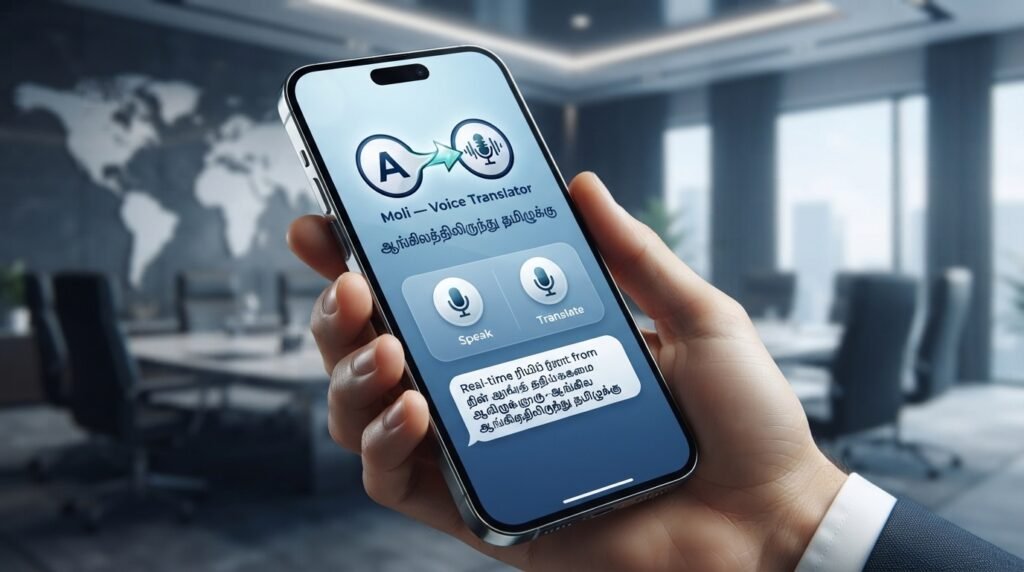
Typing back and forth works for emails. It does not work for talking to a taxi driver or a hotel clerk. Voice translation, also called conversation mode, lets two people speak naturally while the app listens, translates, and reads the result aloud.
Google Translate’s conversation mode is the most polished. You tap the microphone, speak, and the app displays and speaks the translation. The other person taps their language and responds. The app detects when each person stops talking and switches automatically. It is not seamless. Background noise confuses it. Accents confuse it. But in a quiet room with clear speakers, it works well enough to have a real conversation.
Microsoft Translator goes a step further with its multi-person conversation feature. Multiple people can join a session from their own phones, each speaking their own language. The app translates everyone’s contributions in real time. This is genuinely useful for small group meetings or classroom settings.
The limitation with all voice translation is latency. There is always a delay between speaking and hearing the translation. That delay makes conversations feel stilted. It also means the app cannot handle rapid back-and-forth banter. Set expectations accordingly. Voice translation is for exchanging information, not for charming someone at a dinner party.
Privacy and Security: When Free Costs Too Much
Translation apps process some of the most sensitive data imaginable. Business negotiations. Medical consultations. Legal discussions. Personal conversations with a partner. If that data flows through a third-party server, someone else can access it.
Google’s terms state that translated content “may be used to improve our services.” That is standard for free products. Microsoft’s privacy policy is similar. For most casual use, this is an acceptable trade. These companies have strong security practices and are not reading your individual translations.
But “not reading” is not the same as “cannot read.” If you are a journalist working with confidential sources, a lawyer handling privileged communication, or a businessperson negotiating a sensitive deal, cloud-based translation is a risk. The safest approach is on-device translation, where the text never leaves your phone.
Apple’s built-in Translate app processes everything on-device by default. iTranslate Pro does the same. These apps are not as feature-rich as Google Translate, and their language support is narrower. But for privacy-sensitive situations, they are the only responsible choice.
A middle ground exists. Some organizations use enterprise translation services with contractual privacy guarantees and data processing agreements. DeepL offers a team plan with data protection provisions. Microsoft’s enterprise Azure Translator service includes compliance certifications. These options cost money but provide legal accountability that free services do not.
How to Test a Translate App Before Committing
Downloading five apps and trying them all sounds tedious. It is not. It takes 15 minutes and saves you from discovering a fatal limitation when you actually need the thing.
Start with a sentence that contains an idiom. Something like “We’re on the same page” or “Let’s circle back next week.” Run it through each app and see what comes out. A good translation preserves the meaning even if it loses the metaphor. A bad translation produces something literal and nonsensical.
Next, test a sentence with ambiguous words. “The bank was steep” versus “The bank was closed.” Good apps use context to pick the right meaning. Bad apps guess and often guess wrong.
Finally, test offline mode. Turn on airplane mode, open the app, and translate the same sentences. The drop in quality tells you exactly what you lose without a connection.
Pro Tip: Test the app with a photo of handwritten text. Printed text is easy. Handwriting separates the truly capable apps from the ones that only work in ideal conditions.
Key Takeaways
- Google Translate offers the widest language coverage and best free features, but sends your data to the cloud
- DeepL produces the most natural-sounding translations for supported languages, ideal for professional and creative work
- Offline translation requires downloading language packs in advance, and quality drops noticeably compared to online mode
- On-device processing (Apple Translate, iTranslate Pro) is the safest choice for confidential or sensitive content
- Voice translation works best in quiet environments with clear speakers, but latency makes natural conversation difficult
Frequently Asked Questions
Q: What is the most accurate translate app overall?
A: For European and East Asian language pairs, DeepL consistently produces the most natural, human-sounding translations according to blind comparisons by native speakers. For languages outside DeepL’s 30-language support, Google Translate offers the best accuracy across its much wider range.
Q: Can I use a translate app without an internet connection?
A: Yes. Google Translate, Microsoft Translator, and iTranslate all offer offline modes. You must download language packs in advance while connected to WiFi. Offline translations are less nuanced than online ones but work for basic communication.
Q: Is Google Translate safe for confidential documents?
A: No. Google’s privacy policy allows the company to use translated content to improve its services. For confidential business, legal, or medical documents, use an app with on-device processing like Apple Translate or iTranslate Pro, or an enterprise service with a data processing agreement.
Q: Which translate app is best for travel?
A: Google Translate. Its live camera translation handles signs and menus, its conversation mode enables basic dialogue, and its offline packs work in areas without cell service. The language coverage means it works almost anywhere you go.
Q: Does DeepL have an offline mode?
A: No. DeepL requires an internet connection for all translations. It does not offer downloadable language packs or on-device processing. This is a significant limitation for travelers or anyone who needs translation in areas with unreliable connectivity.
Q: How do camera translation features actually work?
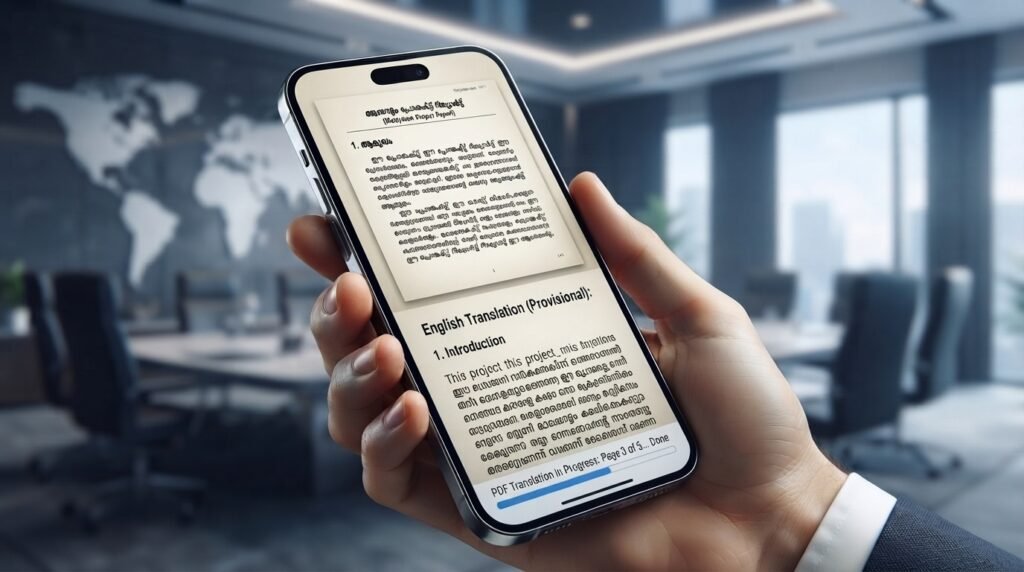
A: Camera translation uses optical character recognition to identify text in an image, then runs that text through the same neural machine translation engine used for typed input. Google Translate overlays the translated text onto the original image in real time. The technology works well on flat, well-lit printed text and struggles with handwriting, curved surfaces, and stylized fonts.
Q: Are paid translate apps worth the money?
A: It depends on your needs. If you translate sensitive content and need on-device privacy, yes. If you need reliable offline performance, yes. If you only translate occasional phrases while connected to WiFi, free apps are sufficient.
Q: Can a translate app replace learning a language?
A: No. Translate apps handle transactional communication: ordering food, asking directions, understanding a document. They cannot convey tone, humor, cultural nuance, or build genuine human connection. They are a tool, not a substitute for language learning.
Q: Which translate app works best for business meetings?
A: Microsoft Translator’s multi-person conversation feature allows several participants to join a session from their own devices, each speaking their own language. For one-on-one business conversations where phrasing quality matters, DeepL produces more polished results.
Q: Do translate apps work with voice in noisy environments?
A: Poorly. Background noise significantly reduces voice recognition accuracy. For best results, speak clearly in a quiet environment. Some apps handle moderate noise better than others, but none work reliably in loud restaurants, streets, or crowded spaces.
References & Further Reading
- DeepL Press Information , Official documentation on DeepL’s neural network architecture and language coverage: https://www.deepl.com/press
- Google Translate Help , Official guide to offline translation and language pack downloads: https://support.google.com/translate
- Microsoft Translator Documentation , Technical details on multi-person conversation features and enterprise compliance: https://www.microsoft.com/translator
- Apple Translate , Overview of on-device translation privacy architecture: https://www.apple.com/ios/feature-availability/#translate
—
About This Article
This guide draws on hands-on testing across five major translate apps on both iOS and Android, combined with research into the privacy policies and technical documentation published by each service. Translation quality assessments reflect both personal experience and publicly available comparative studies. No app developer paid for inclusion or influenced the recommendations.